
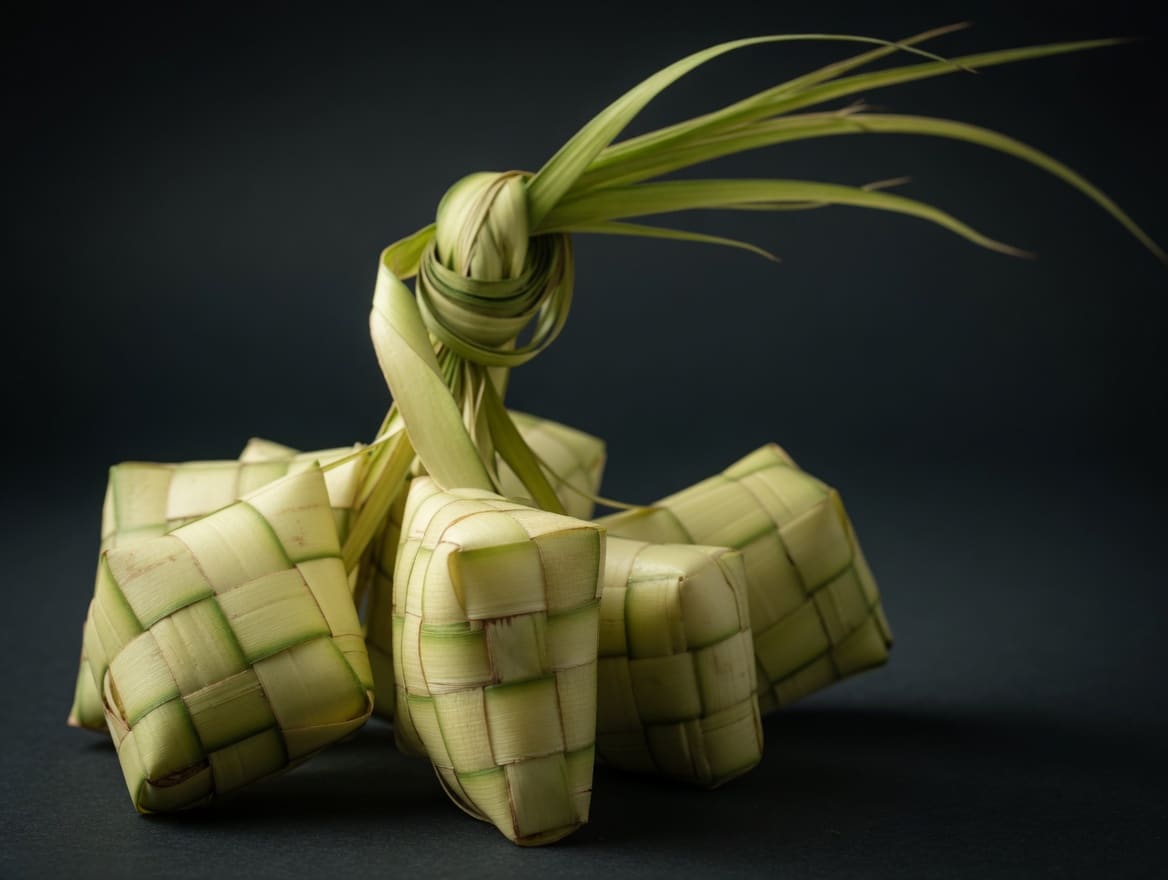
Weaving Ketupat: The Weaving of Life
A Ritual of Balance, Connection, and Becoming
Across the Indonesian archipelago, tradition grows from an intimate relationship between humans, nature, and the divine. These elements do not exist in isolation; they flow into one another, meeting and reshaping meaning—much like currents converging in the sea.
On the calm waters of Wakatobi, a quiet ritual unfolds. Hands begin to move with care, weaving young coconut leaves into a humble yet deeply symbolic form: ketupat. What starts as a seemingly intricate pattern slowly becomes fluid, almost instinctive—as if guided by a rhythm that has always been there, waiting to be remembered.
Symbolism in Form
In Indonesian tradition, ketupat is more than a vessel for rice. Its woven structure mirrors the complexity of life itself—intersections of choice, moments of tension, and the transformations that shape who we are. Each fold and crossing tells a story of balance and continuity.
Philosophy of Balance
This symbolism resonates deeply within Balinese Hindu philosophy, particularly the concept of Rwa Bhineda—the coexistence of opposing forces. Like the ocean, which can be both serene and restless, life holds contradictions that are not meant to be resolved, but harmonized.
Nature and Harmony
The coconut leaf, too, carries meaning. Drawn from nature and destined to return to it, it reflects the essence of Tri Hita Karana—the balance between humans, the natural world, and the spiritual realm. Surrounded by the vastness of the sea, this awareness becomes more profound: we are not separate from our environment, but intricately woven into it.
A Shared Meaning
When the ketupat is finally shared, it transcends its role as food. It becomes a symbol of journey and connection—linking process with purpose, and the individual with the collective.
In its simplicity, it reminds us that life, like weaving, is not about perfection, but about presence, patience, and the ties that bind us together.